


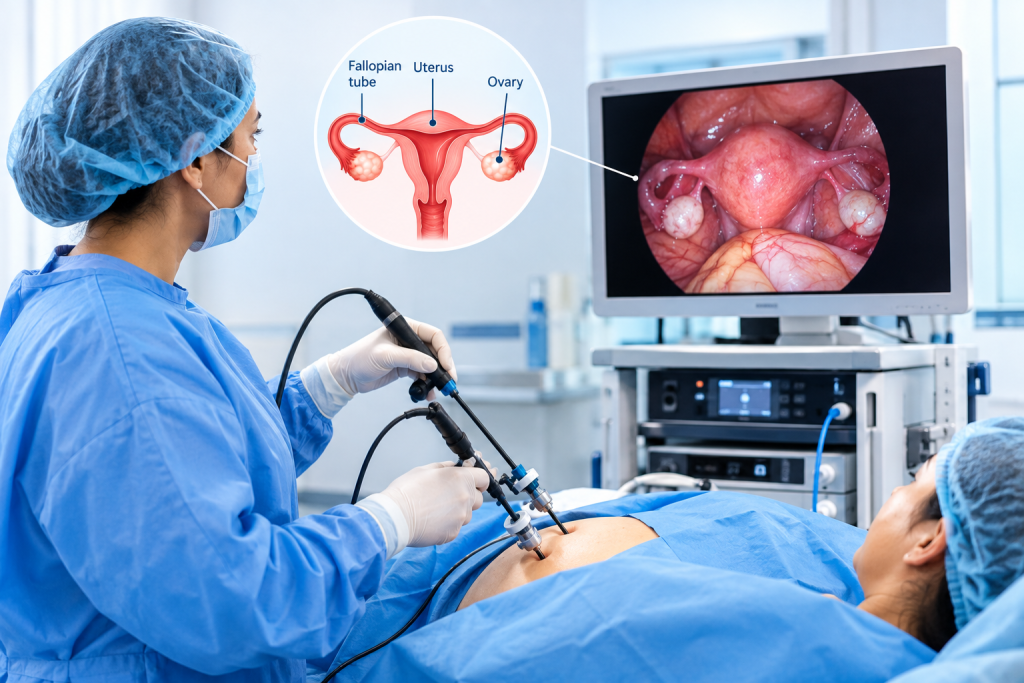
When a woman is finding it hard to get pregnant, doctors usually start with a few basic tests. Blood tests and ultrasound scans tell us a lot, but not everything. Sometimes the only way to know what is really going on is to look inside the uterus, the fallopian tubes or the pelvic area.
That is where gynae endoscopy comes in.
Gynae endoscopy mainly covers two procedures: hysteroscopy and laparoscopy. Both are minimally invasive, which means no large cuts and usually a quicker recovery. They let a fertility specialist see the reproductive organs directly and spot problems that routine tests can miss.
What Is Gynae Endoscopy?
Gynae endoscopy is a way of examining the female reproductive system using a small camera. Depending on what your doctor suspects, you may be advised to have a hysteroscopy, a laparoscopy, or both.
Hysteroscopy means a thin camera is passed through the vagina and cervix to look inside the uterus. It can show problems like uterine polyps, fibroids, scar tissue (adhesions) or an unusual shape of the uterine cavity.
Laparoscopy is done through very small cuts in the abdomen. It gives the doctor a view of the uterus from the outside, along with the fallopian tubes, ovaries and the area around them. It can help pick up conditions such as endometriosis, pelvic adhesions and certain problems with the fallopian tubes.
If you are looking for a gynae laparoscopy clinic in Varanasi, take your time choosing. Look at the specialist’s experience, the facilities available, how they approach diagnosis, and whether the plan fits your own medical situation.
When Might a Doctor Suggest Endoscopy?
Not every woman with fertility problems needs this. Far from it.
A fertility specialist will first look at your medical history, your symptoms, your earlier test reports and any treatment you have already had. Only then will they decide if endoscopy is worth doing.
It is usually considered when the standard fertility tests have not given a clear answer. It may also be suggested if there is a reason to suspect endometriosis, pelvic adhesions, an abnormality in the uterus, a past pelvic infection, or a problem with the fallopian tubes.
Women who have gone through repeated IVF failure or implantation failure are sometimes advised to have a closer look too, if the doctor thinks something inside the uterus or pelvis could be part of the reason.

How Does It Help Find the Cause?
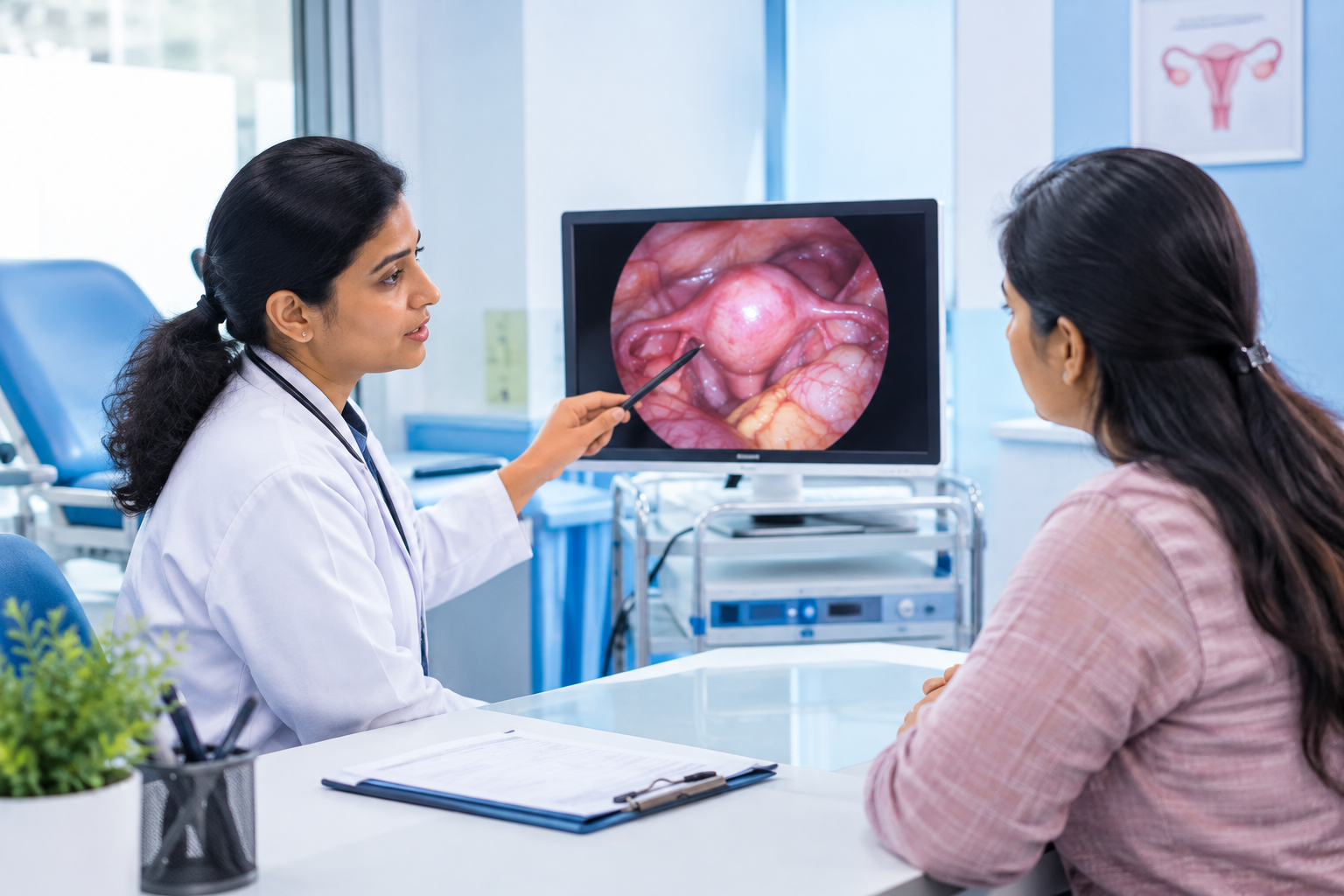
The biggest benefit is simple: the doctor can actually see what is happening, instead of guessing from reports.
During a hysteroscopy, the doctor checks the uterine cavity for anything that could get in the way of an embryo implanting. If a small problem is found and it makes medical sense to treat it right away, that can often be done in the same sitting.
A laparoscopy shows the pelvic organs from the outside. It can reveal endometriosis, scar tissue and other conditions that affect fertility. Here too, in some cases, the doctor may be able to correct the problem during the same procedure.
All of this gives the fertility team something concrete to work with. The treatment plan is then based on what was actually found, not just on general test results.
Hysteroscopy or Laparoscopy: Which One Do You Need?
The two look at different areas, so one cannot replace the other.
Hysteroscopy is mainly about the inside of the uterus. It is the right choice when there is a concern about polyps, fibroids, adhesions or the shape of the uterine cavity.
Laparoscopy looks at the reproductive and pelvic organs from the outside. It is more useful when endometriosis, pelvic adhesions or tubal problems are suspected.
Sometimes a doctor will advise both, to get the full picture in one go. What matters is that the decision is based on your own fertility history. Endoscopy should never be treated as a routine test that everyone must have.
If you are considering a gynae laparoscopy hospital in Varanasi, it helps to ask your specialist a few questions beforehand: what exactly will be done, what type of anaesthesia is used, what they might find, and how long recovery usually takes.
What Happens Afterwards?
Recovery depends on which procedure was done, and whether anything was treated at the same time. Many women feel mild discomfort, bloating or light spotting for a short while. This is common and usually settles on its own.
Your specialist will tell you when you can get back to your normal routine and whether you need to be careful about anything. If a problem was found and treated, they will also discuss what comes next. That might mean trying to conceive naturally, or moving on to IUI or IVF.
The Gynae Endoscopy in Varanasi procedure and its recovery time vary depending on whether you have a hysteroscopy, a laparoscopy or both together. Always follow the instructions your own doctor gives you.
One honest point worth making: finding and fixing a problem does not guarantee pregnancy. Fertility depends on many things at once, including age, egg quality, sperm health, how the ovaries are working and the overall condition of the reproductive organs.
Cost and Choosing the Right Evaluation
The Gynae endoscopy Cost in Varanasi is not the same for everyone. It depends on the type of procedure, the hospital and its facilities, the anaesthesia used, what diagnostic work is needed, and whether any treatment is carried out during the procedure.
Ask for a clear estimate before you book, and make sure you understand what is and is not included in it.
Female infertility often has more than one cause. That is why a proper evaluation matters so much in planning treatment. Gynae endoscopy can give real, useful answers when your doctor suspects a uterine or pelvic issue that ordinary tests cannot properly assess.
At IVF New Life in Varanasi, the fertility evaluation is planned around your medical history and what your case actually needs. A specialist can advise whether hysteroscopy, laparoscopy or some other test is the right next step for you.
If you have been trying to conceive without success, sit down with a qualified fertility specialist and talk through your symptoms and past reports. It is often the quickest way to work out which tests will actually help.